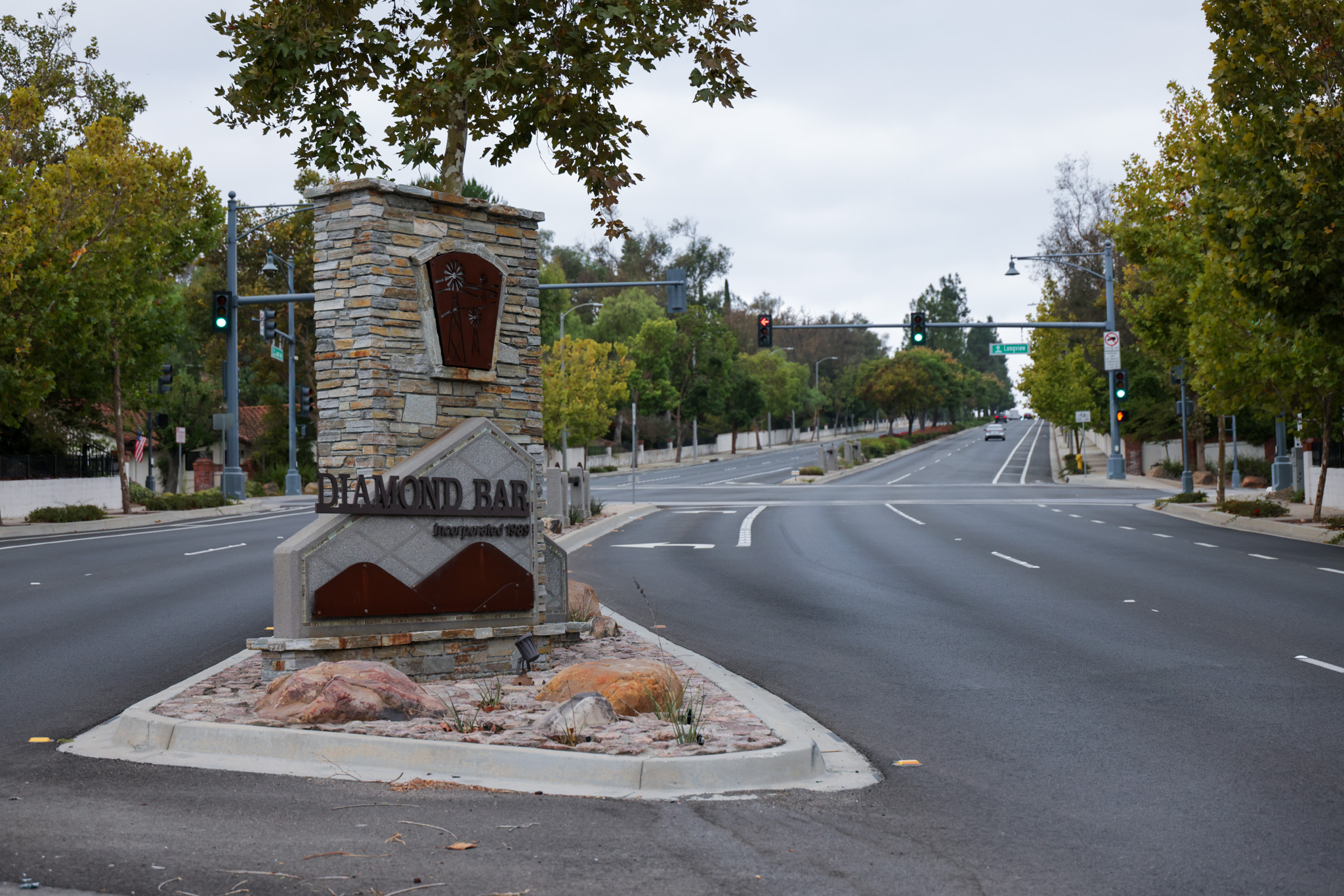
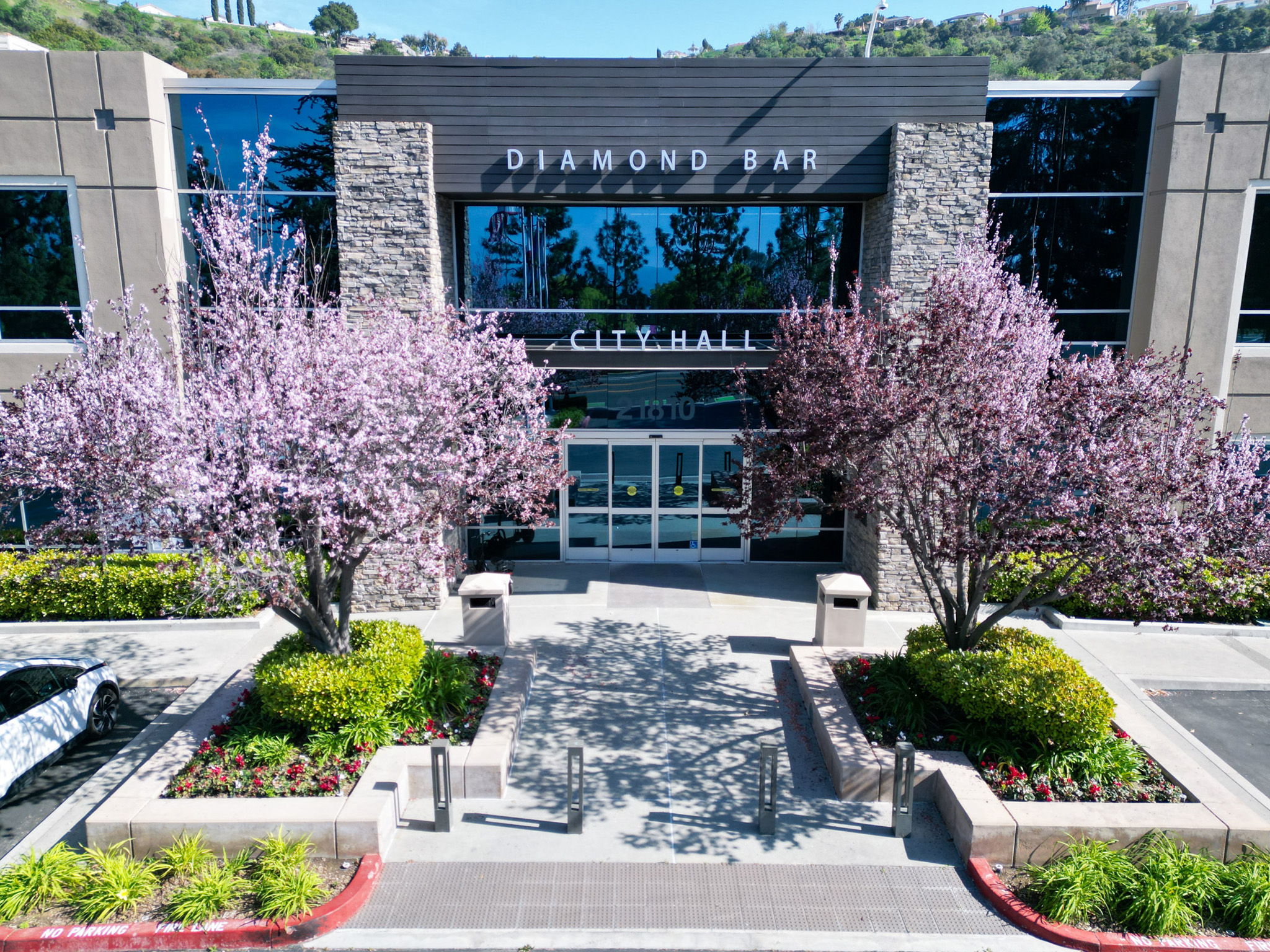
As with many Southern California communities, Diamond Bar's recorded history began with a Mexican land grant. On March 30, 1840, Governor Juan Alvarado deeded 4,340 acres, which included Brea Canyon and the eastern Walnut Valley, to Jose de la Luz Linares, who founded Rancho Los Nogales, or Ranch of the Walnut Trees. Linares died in 1847, and his widow sold a choice portion of the ranch to Ricardo Vejar for $100 in merchandise, 100 calves, and the assumption of her late husband's debts. Vejar already owned the Rancho San Jose to the east (now Pomona), and by acquiring the rest of Rancho Los Nogales over the next ten years, became the fifth wealthiest landowner in Los Angeles County, with over 10,000 acres.
New Owners
Unfortunately, Vejar's luck did not last. When the United States government took over California and resurveyed the old land grants, he ended up with only 464 acres. Then the great drought of the 1860s forced most of the area ranchers to borrow money to feed their cattle. Vejar had been trading with two Los Angeles merchants, Isaac Schlesinger and Hyman Tischler, and they loaned him $600 for supplies at an interest rate of 8% per month. When the note, with compounded interest, was finally called in for over $28,000, Vejar couldn't pay, and his property passed to Schlesinger and Tischler in 1864.
Spadra
The Rancho Los Nogales did not prosper under its new owners, and they were surrounded by hostile neighbors who remained loyal to Vejar. In 1866, they sold the ranch to Louis Phillips for $30,000, bringing his holdings to over 12,000 acres. Phillips sold a portion of the ranch to William Rubettom, who opened up a tavern and overland stage station for the Butterfield route near where the Orange Freeway (57) now crosses Pomona Boulevard. He called the community "Spadra," after his hometown in Arkansas, and this became the first named settlement in the Diamond Bar area.
The Breakup of Rancho Los Nogales
In 1873, the Rancho Los Nogales was sold again, this time to Wilson Beach and George Butler. After that, the property became quite fragmented as parcels were sold off to many different owners. But in 1918, Frederich E. Lewis bought up most of the original Rancho Los Nogales again, and he registered the Brand of Diamond Bar with the California Department of Agriculture. Lewis sold the Diamond Bar Ranch to the Bartholome family in 1943, and they continued to raise cattle on it for the next 13 years.
Development Boom
In 1956, the Diamond Bar Ranch looked much as it did in 1840, with its golden hills peppered by green stands of oak and walnut trees, and grazed by large herds of cattle. The changes of the previous century were nothing, however, compared to the plans that the Transamerica Corporation had for Diamond Bar. In that year, they paid $10,000,000 for 8,000 acres of Brea Canyon, and they master-planned a community that would eventually become home to some 50,000 people. The first model homes were built at the north end of town in 1960, and a development "boom" began.
Demographics
The 2020 United States census reported that Diamond Bar had a population of 55,072. The population density was 3,703.6 inhabitants per square mile (1,430.0/km2). The racial makeup of Diamond Bar was 18.5% White, 3.3% African American, 0.6% Native American, 59.7% Asian, 0.2% Pacific Islander, 7.6% from other races, and 10.2% from two or more races. Hispanic or Latino of any race were 19.6% of the population.[38]
The census reported that 99.6% of the population lived in households, 0.3% lived in non-institutionalized group quarters, and 0.1% were institutionalized.[38]
There were 18,173 households, out of which 33.7% included children under the age of 18, 61.7% were married-couple households, 3.3% were cohabiting couple households, 22.3% had a female householder with no partner present, and 12.7% had a male householder with no partner present. 13.8% of households were one person, and 6.5% were one person aged 65 or older. The average household size was 3.02.[38] There were 14,846 families (81.7% of all households).[39]
The age distribution was 18.4% under the age of 18, 9.0% aged 18 to 24, 24.1% aged 25 to 44, 29.6% aged 45 to 64, and 18.9% who were 65 years of age or older. The median age was 43.8 years. For every 100 females, there were 94.5 males.[38]
There were 18,819 housing units at an average density of 1,265.6 units per square mile (488.7 units/km2), of which 18,173 (96.6%) were occupied. Of these, 74.2% were owner-occupied, and 25.8% were occupied by renters.[38]
The median household income in 2023 was $106,602, with 9.1% of the population living below the poverty line